


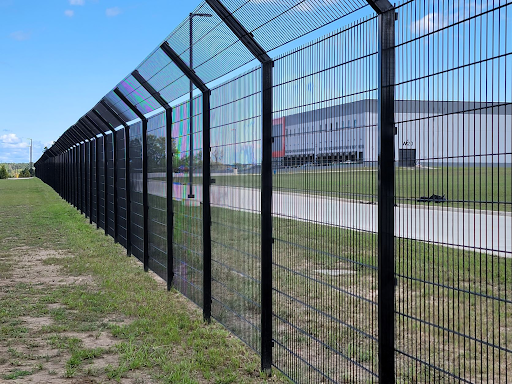
Warehouses, distribution yards, storage facilities, and industrial properties face a growing need for stronger perimeter protection. Theft, vandalism, unauthorized access, and liability concerns have pushed many property owners to reevaluate whether standard fencing systems are enough for their operations. Choosing the right high-security fencing system can help create a stronger physical barrier while also improving visibility, access control, and long-term durability.
The best fencing solution depends on several factors, including the type of facility, the value of stored assets, visibility requirements, access points, and the level of protection needed. Some properties may only need basic deterrence, while others require advanced anti-climb and anti-cut protection for high-risk environments.
Why Warehouses and Industrial Yards Need Stronger Perimeter Protection
Warehouses and outdoor storage yards often contain valuable equipment, inventory, vehicles, raw materials, or tools that can become targets for theft or trespassing. In many facilities, fencing serves as the first line of defense.
A properly designed perimeter system may help:
- Deter unauthorized access
- Reduce theft and vandalism risks
- Improve access control
- Support surveillance systems
- Define restricted areas clearly
- Enhance employee and visitor safety
However, not all fencing systems provide the same level of protection. Standard chain link fencing may work for some applications, but higher-risk facilities often require stronger materials and anti-climb designs.
What Features Matter Most in Security Fencing?
When evaluating fencing options for warehouses and industrial yards, several features can make a significant difference in performance and protection.
Anti-Climb Design
One of the most important features is anti-climb construction. Narrow mesh spacing or specialized welded wire designs make it much harder for intruders to gain footing or handholds. Smaller openings can also limit the use of cutting tools.
Anti-Cut Resistance
Facilities storing valuable assets may benefit from fencing systems designed to resist tampering and cutting attempts. Welded wire mesh systems are often stronger and more difficult to breach than lighter traditional fencing materials.
Visibility
Security fencing should not completely block visibility in many industrial settings. Open mesh systems allow security cameras, lighting, and personnel to monitor activity more effectively while still maintaining perimeter protection.
Durability
Industrial properties need fencing that can withstand weather exposure, impacts, and long-term use. Galvanized and powder-coated steel systems are commonly selected for their durability and corrosion resistance.
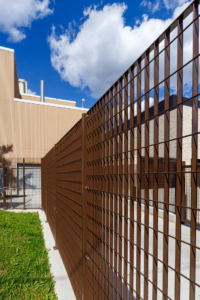
Welded Wire Mesh Fencing Is Often the Preferred Choice
For many warehouse and yard applications, welded wire mesh systems have become a preferred alternative to traditional chain link fencing. These systems combine visibility, durability, and anti-climb protection in a way that fits many industrial environments.
At MFR Manufacturing, we make welded wire security fence systems designed for commercial, industrial, government, and high-security applications. Our systems are engineered to provide stronger perimeter protection while maintaining a clean and professional appearance.
Welded wire mesh fencing is commonly used around:
- Distribution centers
- Equipment yards
- Manufacturing facilities
- Utility sites
- Transportation facilities
- Government properties
- Storage yards
Because the wire intersections are welded rather than woven, these systems are often more rigid and resistant to cutting or deformation.
When Anti-Climb Systems Make Sense
Facilities storing expensive equipment, sensitive materials, or high-value inventory may require additional perimeter protection beyond standard fencing. Anti-climb mesh systems are specifically designed to reduce footholds and handholds. Smaller mesh openings can make climbing extremely difficult while also limiting access for larger cutting tools.
This type of high security fencing is often a strong fit for:
| Facility Type | Why It Benefits |
| Equipment yards | Protects expensive machinery and vehicles |
| Warehouses | Helps deter after-hours intrusion |
| Utility facilities | Adds perimeter control and visibility |
| Industrial plants | Supports controlled access points |
| Storage facilities | Reduces theft and vandalism risks |
Additional features such as razor wire, barbed wire extensions, reinforced panels, or vandal-resistant hardware may also be added for higher-security environments when needed.
Security Is About More Than the Fence Alone
Even the strongest fence works best when combined with other security measures. Lighting, cameras, controlled entry points, gate systems, and visibility planning all contribute to a more effective perimeter strategy.
Property owners should also consider:
- Traffic flow around gates
- Camera placement
- Emergency access requirements
- Maintenance needs
- Future facility expansion
- Visibility for monitoring and patrols
A fencing system should support daily operations while still helping secure the property.
Planning Security Fencing Around Daily Operations
The most effective perimeter systems are designed around how a facility actually functions from day to day. Warehouses and industrial yards often have constant truck traffic, employee access points, loading activity, and outdoor storage areas that all influence fence layout and security planning.
For example, facilities with large equipment yards may need wider gate openings and reinforced entry points to support trailers, forklifts, or delivery vehicles. Distribution centers may prioritize visibility around loading docks and employee entrances so cameras and security teams can monitor activity more effectively.
Other considerations might include:
- Traffic flow throughout the property
- Placement of sliding or swing gates
- Lighting coverage around the perimeter
- Visibility for surveillance systems
- Separation of employee and visitor access areas
- Protection around high-value storage zones
At Metalco, we work with commercial and industrial facilities to help identify fencing systems that support both security and operational efficiency. In many cases, welded wire systems are selected because they provide strong visibility, durable construction, and anti-climb performance without creating a closed-off appearance around the property.
For facilities with elevated security concerns, additional deterrent features and controlled access systems can also be incorporated into the overall perimeter design.
Choosing the Right Fence for Your Facility
There is no one-size-fits-all answer when selecting a perimeter security system. The right solution depends on the level of risk, the type of assets being protected, and how the facility operates on a daily basis.
For many warehouses and industrial yards, welded wire mesh systems offer a strong balance of visibility, durability, and anti-climb protection. Facilities with higher security demands may require reinforced systems with additional deterrent features and controlled access integration.
At MFR Corp, we work with businesses, government agencies, and industrial facilities to help design perimeter solutions that fit the specific needs of each property. If you are evaluating options for high security fencing, we can help you identify a system built around your operational, security, and long-term performance goals.