


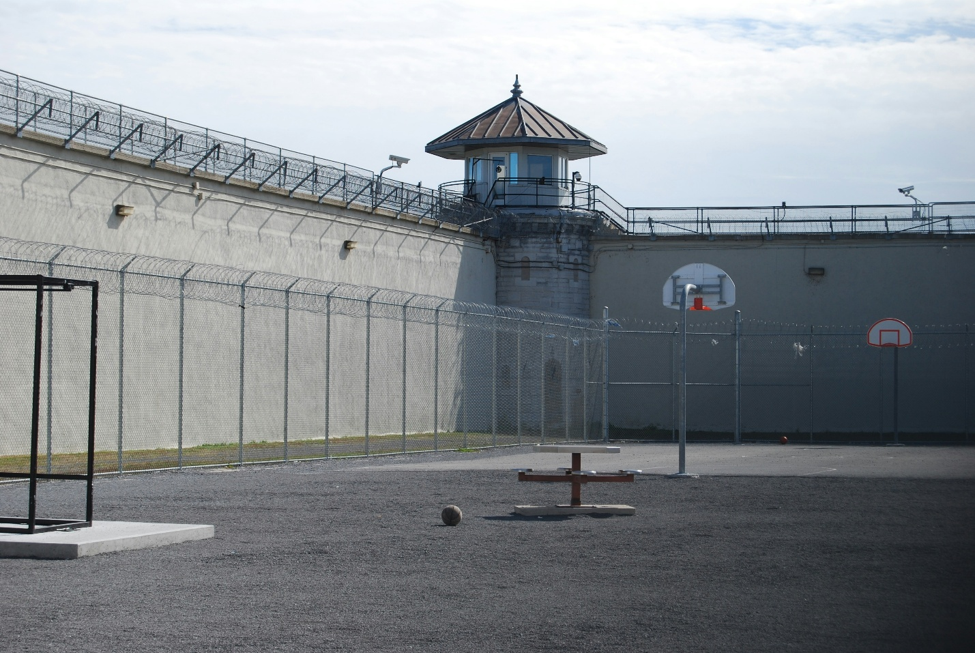
atioCorrectional and prison fencing are considered among the most challenging types of fencing applications in the fencing industry. Not only do federal standards apply to this type of fencing, but specifications from state departments of corrections are also a consideration. In this guide, we will explore the technical specifications of prison and correctional facility fencing, as well as materials and compliance guidelines.
Specifications for Prison and Correctional Fencing
Prison and correctional facility fencing includes systems installed in prisons and jails, detention centers, and juvenile facilities. The goal of such systems is to prevent unauthorized entrance and egress. Due to the nature of these facilities, they automatically trigger specific materials requirements in the construction of the fencing systems, as well as specifics regarding spacing, anti-climb, and height requirements that fence standards for commercial and industrial facilities don’t typically include.
While each jurisdiction does maintain its own specific standards, there are also technical requirements that are commonly tied to the American Society for Testing and Materials (ASTM), the Department of Defense, and the National Institute of Corrections. For instance, baseline requirements as set by the Federal Bureau of Prisons and the various state Departments of Corrections are typically based on ASTM A392, which requires zinc-coated steel chain-link for use in prison and correctional facility fencing systems. In some cases, Department of Corrections specifications require 9-gauge or even heavier wire to be installed at 2-inch openings. Other specifications include heavy-duty, corrosion-resistant steel posts.
Additional Considerations for Prison Fencing
Top and bottom terminations include anti-climb features, such as smooth surfaces and outward-angled tops. Deterrent layers may include laser detection, razor ribbon, or some other type of intrusion system. Vehicle barrier interfaces may include reinforced barriers or trap gates.
Height and gauge requirements for prison and correctional facility fencing systems may depend upon the type of facility in which the fencing will be installed. A maximum-security facility may require fencing of between 16 and 20 feet tall with a minimum of 9-gauge wire to offer cutting resistance and a mesh size of two inches or smaller to prevent climbing.
Local crime rates and the presence of gang activity in a particular locale may also result in the need for heightened security factors for prisons and correctional facilities.
Materials Required for Prison and Correctional Facility Fencing
We engineer our correctional and prison facility fencing to meet strict, high-security standards. These extend far beyond the requirements for industrial or commercial fencing. Prison system fencing must be capable of resisting climbing, cutting, or ramming, along with typical environmental degradation. At the same time, you must be able to integrate the fencing with surveillance and detection systems. While that is a tall order, we excel at these requirements at MFR Manufacturing Corp.
Chain-link is a common type of material used for prison and correctional facility fencing. This ASTM A392 zinc-coated steel chain-link fabric is featured at the baseline with a minimum of 9-gauge wire at 2-inch mesh openings, depending on state DOC specifications. In other cases, core structural materials may include heavy-duty welded mesh panels to provide maximum deterrence.
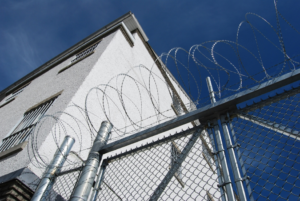
Posts for prison and correctional facility fencing are usually either coated steel or galvanized to resist corrosion, while we specifically design top and bottom terminations to prevent cutting or lifting through the fence line. In many cases, additional security layers may also be incorporated to add cutting deterrence. Such security layers may include razor wire or barbed wire. You may also integrate electrified perimeter systems and vehicle barrier interfaces.
In terms of durability, galvanization and PVC coating both work to extend service life by preventing corrosion, a factor that can be particularly important in locations that experience harsh weather conditions.
Modern correctional and prison system fencing systems also often feature elements for integration with security systems. These can include either attached or embedded motion sensors or alarm systems.
Compliance and Maintenance for Correctional and Prison Fencing
Regular maintenance and inspection are both critical in correctional and prison fencing to ensure compliance and prevent potential breaches, which could result in public safety risks and legal liability. The Bureau of Prisons establishes baseline requirements for all maximum-security facilities, while each state’s Department of Corrections has established fencing standards for their states.
Compliance checklists include verifying that fencing meets ASTM and DOC specifications. You must also confirm the installation of anti-climb and anti-ligature features. It’s also important to ensure that detection and deterrent layers are operational in the fencing. You must maintain regular inspection and repair logs for the fencing. Once you install the fencing, you must train your staff on relevant perimeter security protocols.
Quality Assurance and Customization Availability for Prison Fencing Systems
When it comes to fencing systems for correctional and prison facilities, quality assurance is a must. Fencing systems manufacturers must ensure they strictly follow all standards for strength, deterrence, materials, and protection from environmental degradation.
While adhering to such standards is of the utmost importance, prison facilities often have unique needs. Customization options make it possible for correctional facilities and prisons to resolve unique issues. With the availability of customization options, it is possible to change certain specifications to ensure maximum safety.
Selecting the Ideal Prison and Correctional Facility Fencing Manufacturer
Are you choosing the right manufacturer for prison and correctional facility fencing systems? It’s important to look for a supplier who can ensure maximum quality and adherence to standards. This includes strict compliance with material strength, integration with technology, and customization options. Look for a manufacturer with extensive experience, such as MFR Manufacturing Corp.
Contact MFR Corp for Help with Correctional Facility Fencing Options
Standards, materials, and compliance for correctional facility and prison fencing involve multiple layers related to standards for materials and design. They also involve the inclusion of safety features and continuous maintenance. Both contractors and facility managers must ensure that the fencing system aligns with security regulations. This avoids operational as well as legal risks. At MFR Manufacturing Corp., we have the experience and expertise necessary to ensure full alignment with all standards, materials, and compliance requirements for prison fencing. Contact us to learn more about our products, including high-security and prison fencing systems.