


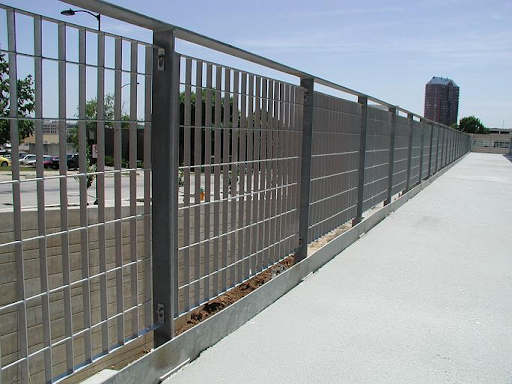
Designing security at a commercial site is rarely about a single feature like fence, gate, camera, etc. It’s more about how multiple layers work together under real-world conditions. The outer boundary is one of the most important of those layers, but it’s also one of the most misunderstood. A perimeter security fence is not just a visual deterrent or a code requirement; it is an engineered system that must account for intrusion risk, site layout, material performance, and long-term durability.
When designed correctly, it does more than enclose a property. It actively controls access, supports surveillance, and reinforces the overall security strategy from the ground up.
Start with Understanding the Purpose of the Fence
Before selecting materials or configurations, it is critical to define what the fence needs to accomplish. Not all commercial sites have the same security requirements.
Common objectives include:
- Preventing unauthorized access
- Protecting valuable equipment or inventory
- Securing sensitive or restricted areas
- Reducing liability and improving safety
- Creating a visual deterrent to vandalism or theft
MFR Corp emphasizes that security fencing is often just one part of a broader protection strategy, acting as both a physical and psychological barrier to intrusion. The clearer the purpose, the easier it becomes to design a system that performs effectively.
Material Selection: Strength Comes First
Material choice is one of the most important decisions in fence design. Commercial security fencing must withstand environmental exposure, repeated use, and potential tampering. Flexible systems like traditional chain link can shift or stretch under stress, especially in high-traffic environments. That movement may not be obvious immediately, but it can create vulnerabilities over time.
High-performance systems typically use:
- Steel or aluminum construction for strength and durability
- Welded wire mesh panels for rigidity and resistance to cutting
- Galvanized and powder-coated finishes for corrosion resistance
Metal fencing systems, like those offered by MFR Corp, are designed to resist weather, impact, and intrusion attempts over time, making them a reliable long-term investment.
Design Against Climbing and Cutting
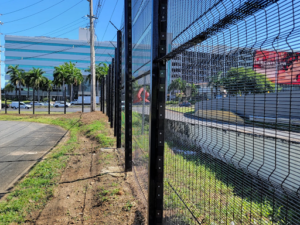
Most intrusion attempts rely on simple methods. If someone can climb or cut through a fence without much resistance, the rest of the system doesn’t matter. Design plays a critical role here. Small details can significantly change how a fence performs:
- Tighter mesh spacing reduces footholds
- Reinforced wire increases resistance to cutting
- Structural bends add rigidity without adding bulk
These features work together to make the fence harder to interact with in a meaningful way. The goal isn’t just to slow someone down but to make access difficult enough that the attempt becomes impractical.
Layout and Continuity Are Where Many Systems Fail
Even a strong fence can become ineffective if the layout isn’t consistent. Weaknesses often appear in places that weren’t given enough attention during planning. Corners, elevation changes, and transition points are common trouble areas. Small inconsistencies like gaps, misalignments, or uneven installation, can create opportunities that aren’t visible at first glance.
A well-designed system maintains continuity from one end of the property to the other. Every section should perform the same way, regardless of where it’s installed. That consistency is what turns a fence into a reliable boundary rather than a collection of separate pieces.
Access Points Should Never Be an Afterthought
Gates are often the most vulnerable part of a commercial fence. They are also the most used, which makes their design even more important. They should be designed to blend and integrate to contribute further to overall security.
A strong fence paired with a poorly designed gate creates an obvious weak point. That’s why access needs to be considered early in the design process.
In most commercial environments, effective access design includes:
- Clear separation between vehicle and pedestrian entry
- Gates that match the strength of the fence itself
- Integration with access control systems
- Layouts that support traffic flow without creating congestion
We approach this as a unified system at Metalco. The fence, gates, and access controls all need to work together to maintain consistent security.
Visibility Should Be Intentional
There’s a common assumption that more privacy automatically improves security. In reality, that approach can create blind spots where activity goes unnoticed.
Many commercial properties benefit from controlled visibility. Being able to see through the fence supports monitoring and allows surveillance systems to function more effectively. At the same time, certain areas may still require screening depending on the nature of the site. The key is balance. The design should support observation without exposing sensitive operations unnecessarily.
Durability Determines Long-Term Value
A fence isn’t a short-term installation. It needs to hold up under constant exposure to weather, use, and occasional impact. Over time, weaker materials can corrode, shift, or require ongoing maintenance. That’s why protective finishes and structural integrity matter just as much as initial strength.
Galvanization and powder coating help extend the life of the system, but they only work when paired with a solid underlying design. A well-built fence should maintain its performance without frequent repairs or adjustments.
Customization Makes the System Work
No two commercial properties are identical, which means a one-size-fits-all approach rarely delivers the best results.
Small adjustments with panel spacing, height, layout, or integration with existing structures, can have a significant impact on performance. Customization allows the fence to match the actual conditions on site rather than forcing the site to adapt to the fence.
We work with clients at MFR Manufacturing to develop solutions that reflect those conditions, ensuring the final system performs as expected once it’s in place.
Premier Perimeter Security Fence Solutions with MFR Corp
A well-designed fence does more than define a boundary. It supports how a site operates, strengthens overall security, and reduces the likelihood of problems over time. A properly planned and designed perimeter security fence becomes an active part of the property’s security strategy, not just a visual feature.
If you’re planning a new installation or evaluating an existing system, we can help you take a more strategic approach. At MFR Corp, we design and deliver fencing solutions built around real-world conditions so you get a system that works from day one. Contact us today to get started.