


When designing and planning an iron/wrought iron balcony railing for a commercial property, appearance is only one piece of the equation. Facility managers, architects, and building owners must also evaluate structural performance, code compliance, long-term maintenance requirements, corrosion resistance, and installation logistics. The right railing system should enhance the building’s design while providing dependable safety and minimizing lifecycle costs. Understanding the engineering and installation considerations before selecting a system can help ensure a successful project from specification through completion.
Know the Performance Requirements for the Space
Commercial balcony railings serve as life safety systems first and architectural elements second. Before comparing styles or finishes, project teams should establish the performance requirements for the application.
Several factors influence the appropriate railing specification, including:
- Occupancy type
- Building height
- Exposure to weather and moisture
- Expected pedestrian traffic
- Local building code requirements
- Required loading capacities
Facilities such as schools, multifamily developments, office buildings, transit stations, municipal properties, and hospitality environments often experience significantly different traffic patterns and environmental conditions. Selecting a railing system designed for the intended application helps improve long-term durability while supporting occupant safety.
Material Selection Matters
Wrought iron and iron-based railing systems remain among the most common choices for commercial applications because they provide excellent strength, design flexibility, and longevity when properly protected.
Modern commercial railing systems also often incorporate welded steel components that can be fabricated into a wide range of architectural profiles while maintaining structural integrity. Unlike lighter materials that may flex under heavier loads, steel offers the rigidity required for demanding commercial environments.
Protective finishes are equally important. Galvanizing and high-quality powder coating systems help defend against corrosion, UV exposure, moisture, and everyday wear. This combination is especially valuable for exterior installations where changing weather conditions can accelerate deterioration if metal surfaces are left unprotected.
At MFR Corp, we manufacture architectural railing systems using the highest-quality materials, all of which are American-made, and protective finishing processes designed to provide long-term performance in demanding commercial applications.
Design Beyond Appearance
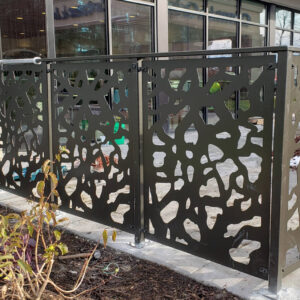
Architectural railings should complement the overall character of a building while remaining practical to maintain throughout their service life. Some projects benefit from simple horizontal or vertical designs that emphasize clean architectural lines. Others may call for decorative infill panels or custom patterns that reinforce a property’s branding or architectural identity.
When evaluating design options, consider:
- Sightline preservation
- Compatibility with surrounding architecture
- Ease of cleaning
- Future maintenance access
- Opportunities for customization
Because commercial projects often involve multiple stakeholders, selecting a manufacturer capable of supporting custom fabrication and project-specific detailing can simplify coordination between architects, engineers, and contractors.
Understanding Commercial Specifications
A commercial railing specification should address far more than dimensions. Project documents commonly include requirements for:
- Material strength
- Wall thicknesses
- Weld quality
- Connection methods
- Surface preparation
- Protective coatings
- Fastener materials
- Fabrication tolerances
- Applicable testing standards
Carefully reviewing these specifications early in the design process helps reduce field modifications and installation delays later. For projects with unique architectural requirements, shop drawings and engineering support can also streamline coordination before fabrication begins. At MFR Manufacturing, we work closely with project teams by providing design assistance, CAD support, and custom fabrication capabilities that help move commercial projects efficiently from concept to installation.
Installation Planning Can Prevent Costly Delays
Even a well-designed railing system can become problematic if installation planning is overlooked.
Before fabrication begins, contractors should verify:
- Structural attachment locations
- Concrete conditions
- Balcony edge dimensions
- Required clearances
- Drainage considerations
- Waterproofing details
- Accessibility requirements
Field verification helps minimize unexpected modifications once materials arrive onsite. Whenever possible, railing components should be manufactured to precise dimensions before delivery. Factory-fabricated systems generally improve installation efficiency while producing more consistent alignment and appearance than extensive field modifications.
Sequencing is another important consideration. Installing railings after waterproofing, exterior finishes, or balcony coatings may reduce the risk of damaging completed surfaces during construction.
Corrosion Protection Extends Service Life
Exterior commercial railings are continuously exposed to moisture, temperature changes, airborne contaminants, and ultraviolet radiation. Without proper corrosion protection, deterioration can begin long before the end of the building’s intended service life.
Hot-dip galvanizing provides a sacrificial zinc coating that helps protect underlying steel from corrosion. When combined with a durable polyester powder coat finish, the system benefits from multiple layers of protection while offering architects greater flexibility in selecting colors and finishes.
For facility managers responsible for long-term maintenance budgets, investing in durable finishes upfront often reduces repainting, repair, and replacement costs over the life of the installation.
Maintenance Should Be Part of the Specification
Commercial properties benefit from establishing a routine inspection and maintenance program after installation.
Periodic evaluations should include:
- Inspecting welds and connections
- Checking anchor hardware for movement
- Looking for coating damage
- Cleaning accumulated dirt and debris
- Addressing isolated finish damage before corrosion develops
Routine inspections often identify minor issues before they become larger structural or aesthetic concerns. Because quality commercial railing systems are engineered for long-term durability, preventive maintenance typically requires significantly less investment than reactive repairs after deterioration has progressed.
It should also be known that with high-quality materials, maintenance requirements are minimal and most companies will back their products. However, it’s always best to be proactive in protecting your investment.
Selecting the Right Manufacturing Partner
Commercial railing projects involve numerous variables that extend well beyond fabrication.
An experienced manufacturing partner can assist with:
- Project-specific engineering
- Custom detailing
- CAD drawings
- Fabrication coordination
- Finish selection
- Installation documentation
These services help reduce uncertainty throughout the project while improving communication among architects, contractors, and owners. At Metalco, we offer engineering, design support, installation, manufacturing, and a full suite of services from start to finish.
Final Thoughts
Choosing the right iron/wrought iron balcony railing involves balancing aesthetics, structural performance, code compliance, durability, and long-term maintenance considerations. By specifying quality materials, protective finishes, and properly engineered systems, facility managers and project teams can improve safety while maximizing the value of their investment for years to come.
At MFR Corp, we’re committed to helping facility managers, architects, contractors, and property owners find railing solutions that perform as well as they look. If you’re planning a new commercial balcony, replacing an existing railing system, or developing specifications for an upcoming project, we’d welcome the opportunity to work with you.
Contact us directly to discuss your project.