


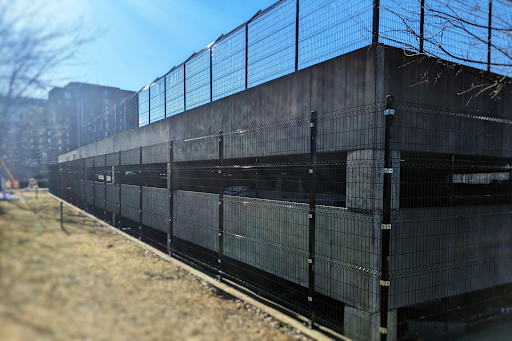
Securing the perimeter of a property is no easy task. Yet it’s typically the first line of defense against unlawful activity, intruders, and other threats. An anti-climb fence is specifically engineered to make scaling, cutting, or breaching far more difficult than with standard fencing systems. For commercial, industrial, municipal, and high-security environments, the right perimeter solution does more than mark a boundary. It actively discourages intrusion.
At MFR Manufacturing, we design and build architectural and security metal fencing systems designed to perform in demanding environments. Understanding how these systems deter intruders helps property owners make informed decisions about perimeter safety.
Why Traditional Fencing Isn’t Always Enough
Standard chain link or ornamental fencing may define property lines, but it often leaves vulnerabilities:
- Wide openings that provide footholds
- Horizontal rails that make climbing easier
- Lightweight materials that can be cut quickly
- Limited resistance to tampering
Intruders typically look for the path of least resistance. If a fence offers easy grip points or flexible materials, it can become a convenience rather than a barrier.
Security-focused metal fencing systems are designed to eliminate those weaknesses.
The Core Design Features That Deter Climbing
A properly engineered perimeter barrier relies on several critical features to discourage scaling.
Tight Mesh or Narrow Picket Spacing
Small apertures reduce the ability to gain hand or foot purchase. Welded wire mesh panels with tight spacing are especially effective because they:
- Prevent fingers from wrapping securely around wires
- Limit opportunities for toe placement
- Resist deformation under pressure
This design dramatically increases the difficulty of climbing compared to standard chain link.
Vertical Orientation
Horizontal rails can function like ladder rungs. Security fencing that minimizes or conceals horizontal support elements reduces climbing leverage.
Many high-security steel fence panels use:
- Flush-mounted rails
- Vertical-only picket alignment
- Hidden fasteners
The result is a smooth, climb-resistant surface.
Rigid Steel Construction
Strength matters. Heavy-gauge steel panels resist bending, cutting, and forced entry attempts. Welded connections create a unified structure that is far more difficult to compromise than woven or loosely attached materials.
Our Metalco steel fencing systems are fabricated for durability and structural integrity, ensuring consistent performance in high-risk environments.
How It Physically Discourages Intruders
Security isn’t just about physical resistance. It’s also about psychology and creating an illusion that will convince a potential intruder that it’s a nearly impossible feat.
A well-designed security barrier sends a message:
- Climbing will be difficult
- Breaching will require time and effort
- Detection is likely
Intruders often avoid properties where access appears complicated or noisy. A rigid welded steel system increases the time required to penetrate the perimeter, which increases the chance of being seen or recorded.
Time is one of the most powerful deterrents in perimeter security.
Integration with Additional Security Measures
Perimeter systems become even more effective when integrated with:
- Access control gates
- Electronic monitoring
- Security lighting
- Camera systems
Metal fencing manufactured to precise specifications allows for seamless integration with gate systems and controlled entry points.
MFR Corp designs and fabricates metal gates, fencing panels, and architectural security systems that work together as a unified perimeter solution.
Ideal Applications for High-Security Metal Fencing
Climb-resistant fencing systems are commonly used in:
- Data centers
- Utilities and substations
- Government facilities
- Transportation hubs
- Industrial plants
- Distribution centers
- Schools and campuses
- Critical infrastructure sites
- Prisons or correctional facilities
In these environments, perimeter failure can lead to significant operational, financial, or safety risks. A strong steel barrier provides a controlled boundary that limits unauthorized access while maintaining visibility.
Visibility Without Compromising Security
Unlike solid walls, welded wire or steel picket security fencing allows clear sightlines.
This offers several advantages:
- Improved surveillance
- Reduced hiding spots
- Better lighting penetration
- Enhanced situational awareness
Maintaining visibility while deterring climbing creates a balanced solution. It’s one that supports both security and operational oversight.
Durability in Demanding Environments
Security fencing must perform year after year, often in harsh conditions. Powder-coated or galvanized steel systems offer:
- Corrosion resistance
- Minimal maintenance requirements
- Long-term structural integrity
- Consistent aesthetic appearance
Because MFR Corp specializes in fabricated metal solutions, our fencing systems are engineered for strength, longevity, and architectural compatibility. Durability matters not only for safety but also for lifecycle cost efficiency.
Strengthening the Overall Security Strategy
A climb-resistant perimeter is rarely the only security measure in place, but it serves as the foundation for everything else. A well-designed barrier clearly defines property lines and directs all pedestrian and vehicle traffic toward designated entry points where access can be monitored and controlled. By increasing the time and effort required for unauthorized access, it creates a meaningful delay that supports detection systems and response protocols.
When perimeter protection is weak, surveillance, alarms, and personnel must work harder to compensate for those vulnerabilities. However, when the boundary itself is strong and properly engineered, it reinforces every other layer of security, making the overall strategy more cohesive and far more effective.
Customization for Project-Specific Needs
Not all facilities have the same risk profile. Perimeter systems can be customized based on:
- Height requirements
- Mesh or picket spacing
- Finishes and coatings
- Gate integration
- Architectural appearance
MFR Corp works with architects, contractors, and facility managers to design steel fencing solutions that meet both security and aesthetic goals. Security does not have to sacrifice appearance.
Long-Term Investment in Protection
A professionally manufactured and installed steel security fence is not a temporary solution. It represents a long-term investment in:
- Asset protection
- Liability reduction
- Operational continuity
- Employee and public safety
Attempted intrusion can lead to theft, vandalism, safety hazards, and operational downtime. Strengthening the perimeter helps reduce those risks before they become costly incidents.
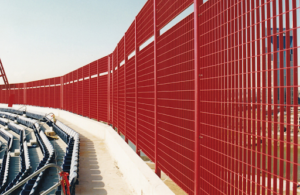
Anti-Climb Fence Solutions with MFR Corp
An anti-climb fence actively discourages intrusion by eliminating footholds, resisting tampering, and increasing the time required to breach the perimeter. As a result, for facilities where security is critical, investing in the right fencing system strengthens your entire safety strategy.
If you’re evaluating perimeter security for a commercial, industrial, or municipal property, contact us to discuss your project. We’ll work with you to design a perimeter solution that protects your assets and supports your operations. We will also make sure it delivers lasting peace of mind.