


When planning a perimeter protection project, aesthetics and durability are only part of the equation. Meeting security fencing compliance requirements is equally critical. Whether they’re protecting a data center, transportation hub, utility substation, government facility, or commercial property, fencing systems must align with industry standards, building codes, and performance specifications to ensure both safety and legal adherence.
This guide breaks down what compliance actually means, which standards matter most, and how to evaluate whether a fencing system meets the necessary benchmarks.
What Does Compliance Really Mean?
Truthfully, compliance is going to depend significantly on the industry or the property in question. It is always important to work with a company that can familiarize themselves with regulations and industry-specific compliance demands to ensure you are meeting those needs.
In the context of high-security perimeter systems, compliance refers to meeting specific performance criteria established by recognized organizations, government agencies, and regulatory bodies.
These standards typically address:
- Impact resistance
- Forced-entry delay time
- Anti-climb and anti-cut performance
- Corrosion resistance
- Wind load ratings
- Structural integrity
- Visibility requirements
Compliance is not a marketing label. It is measurable, test-based performance verification.
Security Fence Standards and Testing Protocols
Security fencing systems may be evaluated under several recognized standards depending on the facility type and risk level.
ASTM Standards
The American Society for Testing and Materials (ASTM) provides testing protocols for fencing components and performance characteristics. Examples include:
- Structural steel specifications
- Coating thickness requirements
- Impact testing
- Material durability testing
ASTM standards ensure materials perform as expected under stress and environmental exposure.
UL 752 and Ballistic Ratings
For facilities requiring ballistic protection, fencing panels may be evaluated under UL 752 standards. These ratings classify a material’s ability to withstand specific calibers and projectile types.
Ballistic-rated fencing is common in:
- Government facilities
- Law enforcement compounds
- Financial institutions
- Critical infrastructure sites
Not every site requires ballistic performance, but when it does, certification documentation is essential.
ASTM F2656 Vehicle Barrier Testing
High-risk facilities may require crash-rated perimeter systems. ASTM F2656 establishes testing procedures for vehicle impact resistance, measuring:
- Vehicle weight
- Speed at impact
- Penetration distance
While fencing alone may not always serve as a vehicle barrier, integrated perimeter systems can include crash-rated components for higher-threat environments.
Anti-Climb and Forced Entry Standards
Certain environments require fencing that resists scaling, cutting, and breaching attempts. Performance testing may evaluate things like how long it would take to breach the structure, how resistant materials are to various tools, and whether or not someone could climb the fence design.
Features that support compliance in this area include:
- Tight mesh spacing
- Heavy-gauge steel
- Welded panel construction
- Concealed fasteners
- Tamper-resistant hardware
These characteristics are common in engineered security fence systems used for correctional facilities, substations, and high-security commercial properties.
Material Considerations and Compliance
Material selection also plays a direct role in achieving required performance standards.
Steel Strength and Gauge
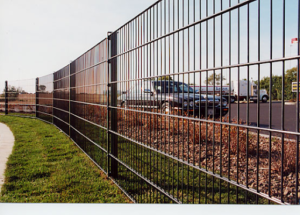
Heavier-gauge steel provides greater impact resistance and structural integrity. Welded wire mesh panels often outperform traditional chain links when higher levels of security are required.
Coating Systems
Corrosion resistance is a major compliance factor, particularly in coastal or industrial environments. Galvanization and powder coating systems are evaluated for:
- Coating thickness
- Salt spray resistance
- Longevity under environmental stress
In addition, improper coatings can shorten system lifespan and compromise compliance.
Post and Foundation Engineering
Fence panels are only as strong as their supporting structure. Compliance also depends on:
- Proper post spacing
- Engineered footing depth
- Wind load calculations
- Soil condition analysis
For critical sites, stamped engineering drawings may be required to meet municipal or federal regulations.
Site-Specific Regulations
In addition to national testing standards, local codes often influence fence design and installation.
These may address:
- Maximum height restrictions
- Required setbacks
- Visibility requirements near roadways
- ADA accessibility considerations
- Fire egress compliance
Failure to account for municipal codes can delay projects and result in costly redesigns.
Industry-Specific Requirements
Different industries operate under different regulatory expectations.
- Utilities and Substations: Electric utility facilities often follow NERC CIP (North American Electric Reliability Corporation Critical Infrastructure Protection) standards, which require specific physical security measures.
- Transportation and Ports: Airports and maritime facilities may follow TSA and Department of Homeland Security guidelines, including defined perimeter hardening requirements.
- Data Centers: Data centers frequently require multi-layered security systems, including controlled access points, anti-climb fencing, and integration with surveillance systems.
Understanding these nuances ensures that perimeter protection aligns with operational risk levels. These are just a few examples, but there are many different types of facilities and properties that must meet very specific compliance needs.
Documentation and Verification
Compliance is not complete without documentation. A qualified security fencing provider should be able to supply documentation to back up the compliance factors with things such as:
- Product data sheets
- Testing certifications
- Engineering calculations
- Material specifications
- Installation guidelines
This documentation is also critical for audits, inspections, and insurance verification.
The Role of Engineered Security Fence Systems
Modern high-security fencing has evolved well beyond standard chain link. Engineered systems also feature some of the following details:
- Welded steel panels
- Anti-ram reinforcement options
- Integrated access control compatibility
- Architectural finishes
- Custom fabrication capabilities
Manufacturers such as MFR Corp design and fabricate heavy-duty steel fencing systems tailored to meet demanding performance specifications across commercial, industrial, and government applications.
As a result, combining robust materials with engineered design will help facilities meet stringent security and regulatory expectations without compromising appearance or durability.
Why Compliance Matters Long-Term
Investing in compliant perimeter protection does more than satisfy regulations. In addition, compliance will help with the following:
- Reduces liability exposure
- Enhances facility safety
- Protects assets and personnel
- Supports insurance requirement
- Strengthens risk management strategies
Non-compliant fencing may fail under stress, leading to security breaches or structural damage. As a result, proper planning, material selection, and certified installation ensure the fence performs as intended throughout its service life.
Get Help with Security Fencing Compliance from MFR Corp
Achieving security fencing compliance standards will require understanding applicable standards, selecting tested materials, engineering for site-specific conditions, and maintaining thorough documentation.
At MFR Corp, we design and fabricate engineered steel security fencing systems built to meet demanding industry requirements. If your facility requires compliant, high-performance perimeter protection, contact us today to discuss your project and ensure your system meets the standards that matter most.