


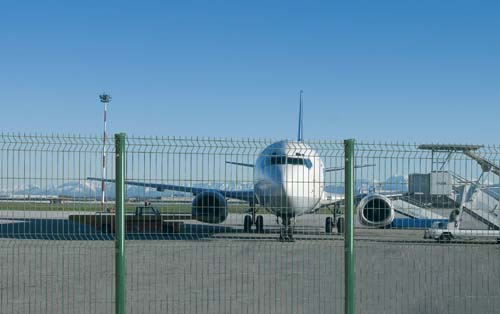
When perimeter protection is a serious part of a site’s risk strategy, the discussion has to go beyond fence height alone. The most effective anti-climb fence designs work because several details come together at once. Details like geometry, mesh spacing, rigidity, finish durability, gate integration, and the ability to support a broader access control plan. On a commercial or industrial property, the right combination can help slow intrusion attempts, improve visibility, and support long-term performance in demanding environments.
Mesh Configuration and Climb Resistance
The foundation of any high-security fence starts with its mesh pattern. A tight welded wire configuration limits the ability to gain leverage, making it significantly more difficult to establish a stable grip or foothold. When spacing is engineered correctly, the fence surface becomes inherently resistant to climbing without relying on additional deterrents.
We design systems like our Securite to prioritize this principle. Smaller apertures reduce climb potential while still allowing visibility through the fence line. This balance is important in commercial and industrial settings where clear sightlines support surveillance and situational awareness.
Mesh design also contributes to anti-cut performance. Thicker wire gauges and closely spaced weld points make it more difficult to compromise a panel quickly, adding another layer of protection without increasing bulk or obstructing views.
Structural Strength and Panel Integrity
A fence that flexes easily can become a weak point over time. Structural rigidity plays a major role in maintaining consistent performance, especially in high-traffic or high-risk environments.
Welded wire panels distribute force across the entire structure rather than concentrating it at a few connection points. This creates a more stable system that resists bending, warping, and repeated impact. Reinforcement features such as V-bends add further strength by increasing panel stiffness without adding excessive weight.
We focus on full-panel integrity because security fencing is not static. It is exposed to environmental stress, potential tampering, and long-term wear. A rigid design helps ensure that the fence maintains its original function instead of gradually becoming easier to defeat.
Visibility Without Compromising Security
Visibility is often overlooked, but it is a critical part of effective perimeter protection. Solid barriers may seem secure, but they can create blind spots that reduce the effectiveness of cameras, lighting, and personnel monitoring the site.
Welded wire systems allow for clear lines of sight while still maintaining a high level of security. This supports:
- Better camera coverage
- Improved lighting effectiveness
- Faster detection of suspicious activity
Maintaining visibility does not weaken the system. When paired with the right mesh design and structural features, it enhances overall security by improving response time and awareness.
Protective Finishes and Long-Term Performance
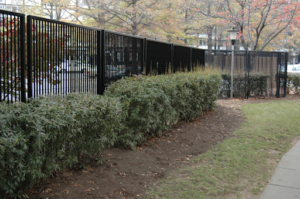
Security fencing must perform consistently in a wide range of environmental conditions. Corrosion, weather exposure, and general wear can all impact performance if materials are not properly protected.
Galvanized steel combined with powder-coated finishes helps extend the life of the system while maintaining its structural integrity. This type of finishing protects against rust, reduces maintenance needs, and keeps the fence looking consistent over time.
We approach finishing as part of the system, not an afterthought. A durable coating ensures that the fence continues to perform as designed without requiring frequent repairs or replacement.
Gate Integration and Access Control
A fence is only as secure as its access points. Gates are often the most vulnerable part of any perimeter, which makes proper integration essential. High-security gates should match the strength and design of the fence itself. That includes consistent mesh patterns, reinforced framing, and hardware that resists tampering. Beyond the physical structure, access control systems play a major role in overall site security.
Depending on the application, this may include:
- Keypad or card access systems
- Automated gate operation
- Integration with surveillance systems
We design gate solutions to work seamlessly with the surrounding fence, ensuring there are no weak transitions between components.
Additional Deterrents for Higher-Risk Sites
In some environments, additional deterrents are necessary to meet security requirements. These features are often layered onto the primary fence system to increase resistance and discourage intrusion attempts.
Options may include:
- Barbed wire or razor wire extensions
- Anti-ram considerations for specific applications
- Enhanced mounting systems for added stability
The goal is not to overbuild unnecessarily, but to match the level of protection to the level of risk. Each added feature should serve a clear purpose within the overall design. The experts at MFR Corp are trained to help with these designs for your unique needs.
Installation Precision and System Performance
Even the best materials and design features can fall short if installation is not handled correctly. Alignment, spacing, and anchoring all affect how the system performs in real-world conditions.
Proper installation ensures:
- Panels remain secure and aligned
- Gaps or inconsistencies are avoided
- Structural strength is maintained across the entire perimeter
Over time, repeated stress at connection points can expose weaknesses in lower-quality systems. That’s why consistent weld integrity and secure panel-to-post connections are critical. Even small amounts of movement can create long-term vulnerabilities if not properly addressed. A well-designed system accounts for these factors from the start, helping maintain alignment, reduce maintenance needs, and ensure the fence continues to perform as intended under real-world conditions, even in demanding commercial and industrial environments where security performance must stay consistent.
We treat installation as a critical part of the process because it directly impacts long-term reliability and effectiveness.
Anti-Climb Fence Solutions from MFR Manufacturing
No single feature defines a secure perimeter. Performance comes from how each element like mesh design, structural strength, visibility, finishing, and access control works together as a complete system.
If you’re evaluating perimeter security, the right anti-climb fence is one that balances resistance, visibility, durability, and integration. When those elements are aligned, the result is a system that not only protects your site but continues to do so reliably over time.
At MFR Corp, we design and build fencing solutions with that full picture in mind. From welded wire systems to integrated gate solutions, our focus is on creating systems that perform consistently in demanding environments. Contact us today to discuss your project and get a solution tailored to your specific security requirements.